
What did we tell Oxford's MBA students about AI adoption?
Summary: Sparks co -founder, Jules Love, lectured at Oxford's Saïd Business School on what it actually takes to make AI adoption stick. In this post, he makes the case for democratic AI — spreading capability across the whole organisation, not just the technical team — and sets out the sequence you need to follow to get there.
Author: Asta Vallis
Read time: 3 minutes
Date: 19.03.26
Spark AI is a strategy-led consultancy helping agency and brand teams move from fragmented experimentation to organization-wide capability. Our blog provides the strategic techniques, insights and industry discussions needed to navigate AI with confidence.
Is your AI programme sitting with the wrong team?
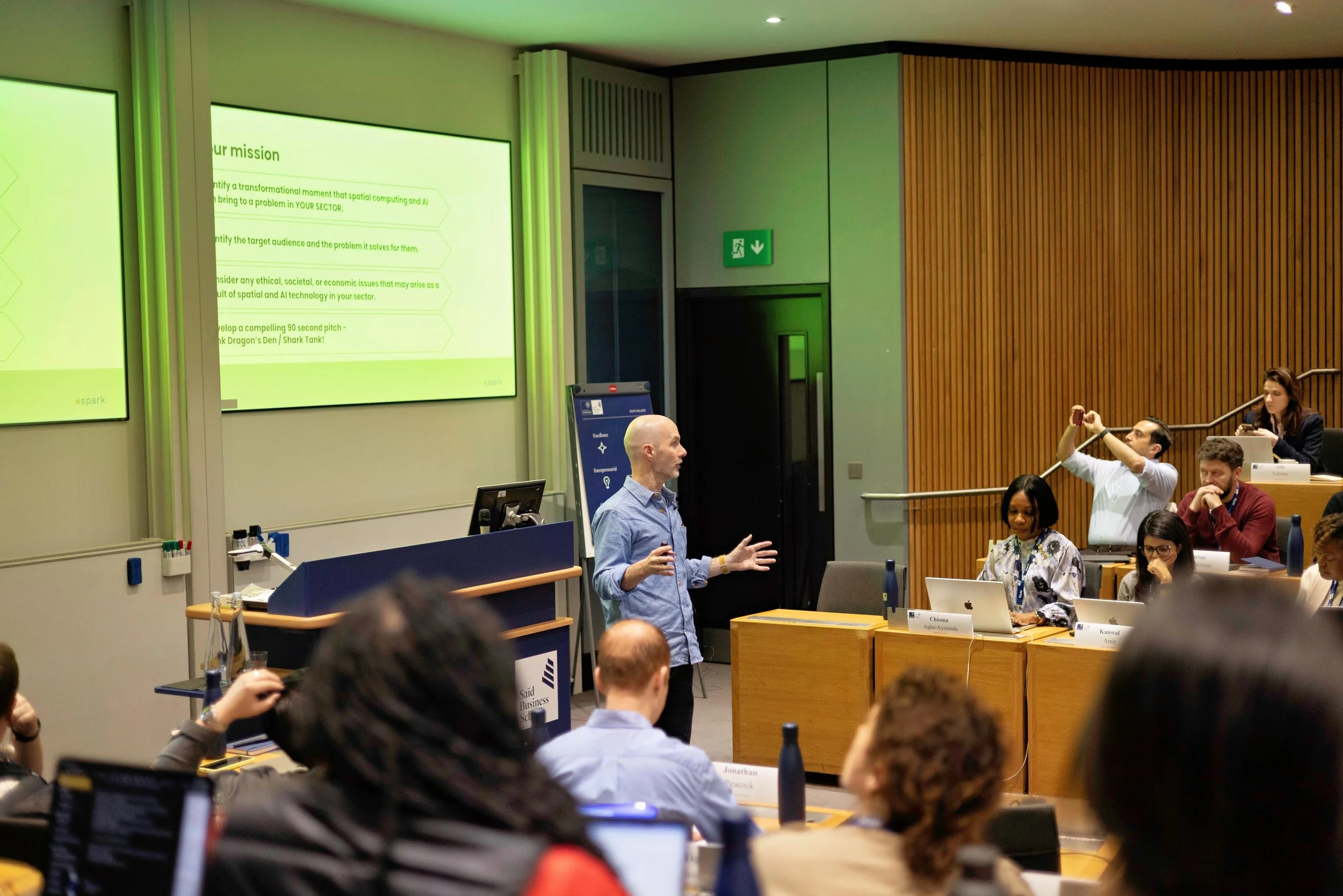
Jules Love, Sparks co-founder, opened up a question to the Oxford lecture room: who here works in an organisation where the generative AI programme is mainly run by the technology team?
Most hands went up.
He then asked how that was going.
The answers were slower to arrive.
It's a pattern Spark AI has seen across the 80+ organisations we've worked with. When generative AI sits primarily with IT, it tends to stay there, wrapped up in platform decisions and infrastructure discussions. While these conversations matter, they are not placed where the value of generative AI actually lives.
Earlier forms of AI did require specialist skills. Machine learning needed data scientists and predictive modelling needed engineers. Generative AI needs plain language, meaning that anyone in an organisation can use it. In most places, that reality hasn't yet changed who's actually in charge of it.
What is democratic AI - and why does it work?
The agencies getting the most out of generative AI treat it as a 'people challenge’. At Spark AI, we champion the use of democratic AI: giving everyone across the organisation the knowledge, authority and support to participate in adoption. That means helping people identify where AI applies to their specific work, building tools that fit their existing workflows, and developing the judgement to use it well.
The goal is capability spread across the whole organisation. When it is concentrated in one team, it rarely scales.
What is the right sequence for AI adoption?
Adoption comes first. People need to be using these tools in their daily work - regularly and practically - to build real fluency. Then comes optimisation, as agencies begins to understand what generative AI actually does to how work gets done. The more ambitious work, innovation and transformation, becomes available once you've been through both of those stages.
The pressure to jump ahead is real. Boards want ambitious pilots. Leaders want to show progress. Organisations that skip adoption and go straight for innovation tend to end up with impressive sounding programmes that don't stick. The teams underneath aren't ready to carry them.
How do you know if your organisation is progressing with AI?
The clearest sign has nothing to do with the sophistication of your tools. It's the proportion of your people using AI consistently, building their own capability, and asking better questions of it each week. That's what the data shows, across sector after sector.
If your AI programme lives in one team, that's worth examining. Real adoption happens when the whole organisation is in it.
Frequently asked questions
How long does it take to move from AI experimentation to embedded capability?
There's no single timeline, but the organisations that get there fastest invest in structured training early, set clear expectations around regular use, and give people permission to experiment without every session needing a deliverable attached.
What is the difference between AI training and AI capability building?
Training gives people skills in a moment. Capability building makes those skills stick and grow over time. The difference shows up months later, in whether people are still using AI and still improving. The AI landscape moves quickly. Organisations that treat learning as a one-off event find themselves falling behind.
Explore our Accelerator programme, that gives your team the cability long after we have left.
Do you need a dedicated AI team to make adoption work?
A dedicated team can help with coordination and governance, but it's a poor substitute for organisation-wide capability. Organisations that rely solely on an internal AI team tend to create dependency rather than fluency. The goal is enough shared understanding across every function that AI decisions can be made at the point where the work actually happens — by the people doing it.