If AI makes the work faster, should agencies still charge by the hour?
Summary: When AI makes creative work faster, charging by the hour turns efficiency into a discount for the client. We explain why the hourly model now works against creative agencies, and walk you through four pricing routes to move to instead. This is for leaders rethinking how they price AI-accelerated work.
Author: Asta Vallis
Read Time: 5 min read
Date: 17th June 2026
Spark AI is a strategy-led consultancy helping agencies and creative teams build organisation-wide AI capability. Together, we'll build the engine that changes not just how your team works, but what your organisation is capable of. Our blog provides the techniques, insights and industry discussions needed to navigate AI with confidence.

If AI makes the work faster, should agencies still charge by the hour?
There's a trap that's easy to walk into. You invest in AI, you rebuild a workflow, and you free up a chunk of time. Then your client says: hang on, if it took you half as long, shouldn't I pay half as much? Clients expect you to invest in AI, then try to hammer you on price when you do. It isn't fair. But if you're still pricing by the hour, you've built the trap yourself.
Why does AI break the billable hour for creative agencies?
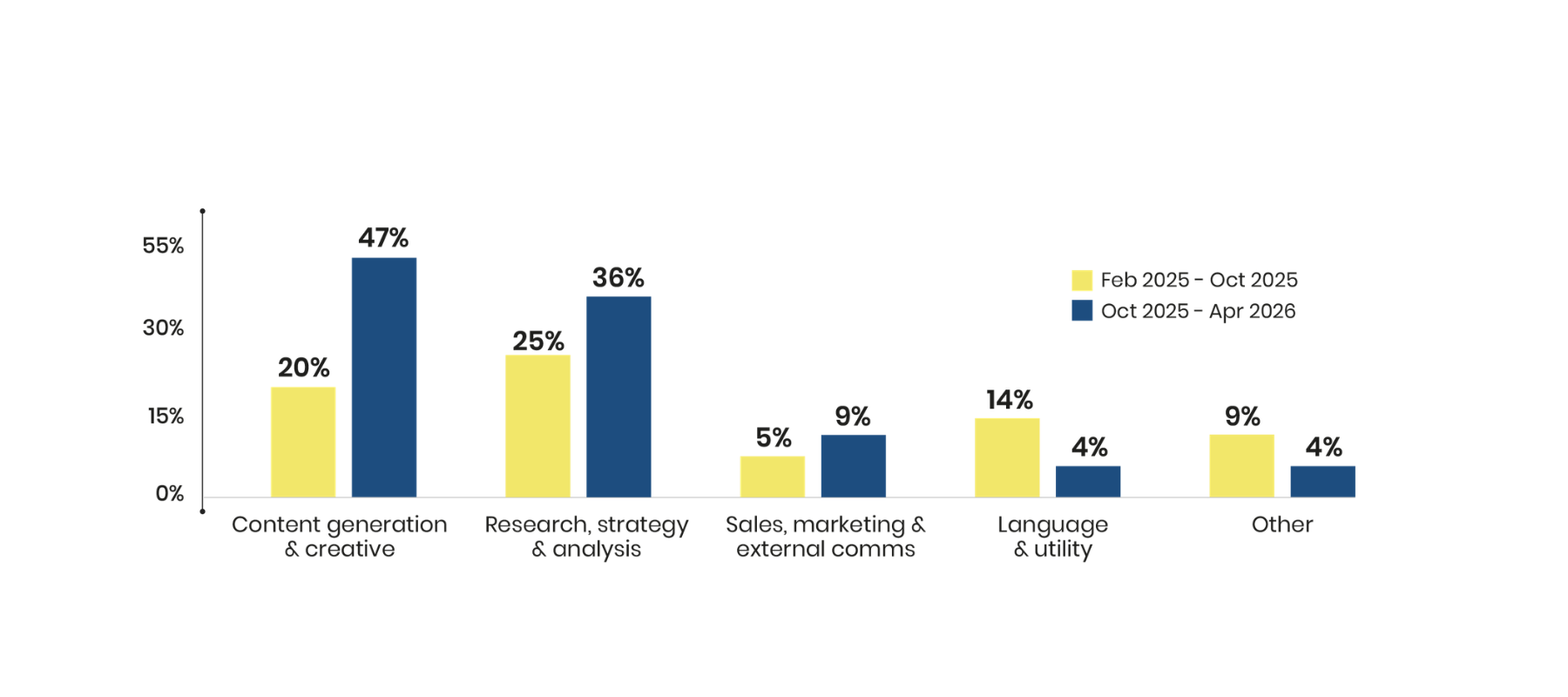
This is no longer hypothetical. In the latest Spring Spark Report, AI use in content and creative generation jumped from 20% to nearly 50% in six months, and research, strategy and analysis climbed from 25% to more than a third. AI is now firmly inside the creative work itself, and in the thinking around it.
At the same time, almost 90% of agency staff say they are saving time using AI. That sounds like good news, and it is, right up until you look at how most agencies still bill. When you charge for time, every efficiency you find becomes a discount you hand to the client. The better you get, the less you earn for the same outcome. The model is working directly against the investment you've made. Read this blog to understand the different pricing models.
How do agencies move to value-based pricing without losing clients?
A word of realism before you redraw every contract. None of these is a switch you flip overnight. Existing clients are used to buying your time, and asking them to change how they pay mid-relationship is a hard conversation, often harder than it's worth. The easier route is to treat these as models to test. Start a new client, or a new project, on new terms, and let the proof build from there.
There's a second shift that has to happen alongside it. Value pricing only works if the client can see the value, and the polished concept they sign off on is only the tip of the iceberg. Beneath it sits everything that got you there: the strategic directions explored, the assumptions challenged, the alternative routes considered and quietly ruled out. AI lets you do more of that thinking, and do it faster, so show it.
None of this means abandoning the craft, rather, it means protecting what makes you valuable and using AI to streamline everything that doesn't. The hour was only ever a proxy for value. AI has finally broken the link between the two. The agencies that thrive will be the ones who stop selling time and start selling what time was always standing in for.
Frequently asked questions:
Where does the data in this post come from?
It comes from the Spark Report, our ongoing research working with 70+ agencies into how AI is being adopted across the creative industry. The latest edition tracked a sharp rise in AI use inside the creative process itself, from content generation to research and strategy. The next report drops in autumn 2026.
Which pricing model should an agency start with?
For most agencies, output-based or bundled pricing is the natural first step, because it changes how you quote without asking the client to think differently about the relationship. Pricing the client and outcome-based models tend to come later, once you've built the confidence and the proof to back them.
What if I don't even know how AI should fit into my business yet?
Start there before you touch your pricing. We've already identified four agency AI archetypes. Each one tells you where to focus your time, your investment, and ultimately how to charge for it. You can read more about the four archetypes and find the one steering your agency here