
What does good AI-assisted work look like in your team?
Summary: AI is speeding up work across teams. Shared expectations help make sure the time saved benefits the team while protecting the quality of the work you deliver.
Author: Asta Vallis
Date: 08.10.2026
Read length: 4 minutes
Spark AI is the AI performance partner that builds organisation-wide AI capability for creative agencies and brand teams. We take ambitious teams from fragmented experimentation to AI embedded across their people, processes and systems – so it delivers real commercial impact.

AI is speeding up the way we work across our teams. That time saving is valuable, but it needs to benefit the team as a whole. If quicker work leaves a colleague with more to do, or takes longer to fix later, some of that benefit is lost. Speed can also come at the expense of the quality you deliver.
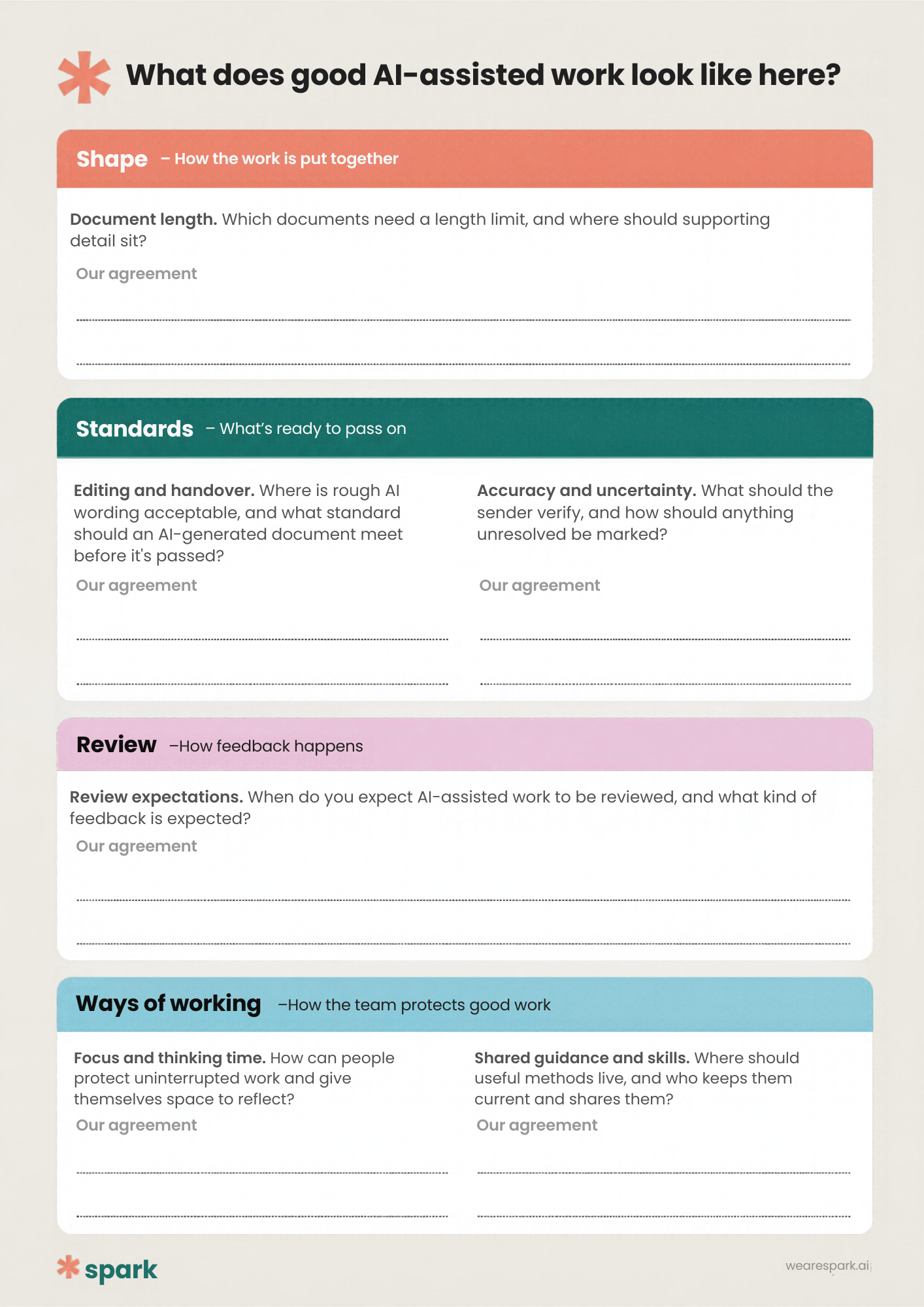
Set clear expectations with your team about how AI is used and what good work looks like. That helps people use the time saved well and take responsibility for the work they pass on. Our worksheet gives teams four areas to discuss.
1. Shape – How do we make the point easy to find?
At Spark AI, we have a two-page policy. AI can speed up the research, but you still need to spend time finding the point and making it readable for your audience.
2. Standards – What should the sender check?
The sender should edit the work into language they’d actually use. Cut generic AI phrases and repetition. Check that the document answers the brief and that its recommendation makes sense. A document can sound polished while still leaving the reader unsure what it’s asking them to do.
Agree where rough drafts are acceptable and how they should be labelled. Before handover, check factual claims against their sources.
3. Review – What help are we asking for?
State what you need from a reviewer before you send the work. Early feedback might challenge the thinking or help narrow a long list of ideas. Later feedback might test whether the recommendation is clear and supported. Those are different jobs, and the reviewer needs to know which one you’re asking them to do.
4. Ways of working – How do we protect thinking time?
Give yourself time to think, even when AI responds instantly. Start with your own view of the task, then examine what the response adds. After a quick exchange, step away for a cup of tea or a short walk if you need to.
Focus on one task while the tool works. Opening another chat or checking email can pull you away from the question you were trying to answer. Use the pause to think about that question, then return to the response with your attention still on the work.
Agree where useful methods and shared guidance live, and who keeps them current. When someone finds a way of working that improves the result, make it available to the rest of the team.
Frequently asked questions
Could we use this checklist as part of an AI away day?
Yes. Set aside time to agree what good work looks like alongside the practical exercises. Our blog How do you run a team AI reset day? shares the structure we used at Spark, including mixed pairs, testing methods on real work and leaving with clear ownership of the next steps.
Where can we get more resources like this?
We publish a bi-monthly newsletter that is free to subscribe to. You can sign up here.
Do we need to agree everything at once?
No. Record the agreements you can make now and keep unresolved questions visible. You can return to them once the team has tried the expectations on real work.
Spark AI – AI training, consultancy and agent building for agencies and brands. Your AI performance partner.